
Walk into a friend’s living room and sometimes you just feel it — the couch is angled right, the lamp glows warm instead of harsh, and even the plant in the corner looks like it belongs there. That feeling doesn’t happen by accident, and it isn’t reserved for people with big budgets or design degrees. Good decoration tips decoradyard style are really just small, deliberate choices repeated consistently, and once you understand the logic behind them, you can apply it to almost any room or yard you own.
Most people assume decorating is about buying the right things. In practice, it’s closer to solving a puzzle: how does this space get used, who uses it, and what would make that daily use feel easier and more pleasant? Once that question is answered, colour palettes, furniture layouts, and lighting choices tend to fall into place on their own.
This matters because a home is one of the few places where atmosphere directly affects how relaxed, focused, or comfortable a person feels every single day. A poorly arranged room doesn’t just look off — it quietly makes ordinary routines slightly harder, from finding a comfortable spot to read, to hosting friends without feeling cramped.
This guide walks through the fundamentals that hold a well-decorated space together, then moves into room-by-room ideas, outdoor styling, budget-conscious swaps, and the small mistakes that quietly undo an otherwise nice room. None of it requires a renovation. Most of it can be done over a weekend, one corner at a time.
What Decoration Tips Decoradyard Really Mean for Everyday Homes
The phrase gets used loosely across blogs and design forums, but at its core it points to a practical, low-pressure approach to styling a home — one that favours comfort and personality over chasing whatever look is trending that month. It’s less about recreating a showroom and more about making ordinary rooms feel considered. Anyone who has scrolled through a home décor feed knows how quickly “inspiration” can turn into pressure to match a specific aesthetic exactly. The more useful mindset drops that pressure and instead asks what would genuinely make a space nicer to live in.
Function Comes Before Style
A gorgeous chair that nobody can comfortably sit in isn’t doing its job. Before choosing a single decorative object, think about how the room is actually used day to day. A living room for a family with young children needs different materials and layouts than a quiet reading nook for one person. Decide the function first, then let the style grow around it — not the other way around. This is one of the more consistent lessons behind decoration tips decoradyard style advice: rooms that work well tend to look good almost automatically, while rooms styled purely for appearance often need constant adjusting to stay usable.
Personality Over Perfection
Perfectly matched furniture sets often feel cold and impersonal. The homes that feel warm and lived-in usually mix old and new, inherited and bought, plain and quirky. A shelf with a travel souvenir next to a plant next to a stack of books tells a small story about the people who live there, and that’s worth more than symmetry. Chasing an exact showroom look can also get expensive fast, whereas building a room slowly around what already means something tends to feel more finished over time, not less.
Textures and Materials Matter More Than They Get Credit For
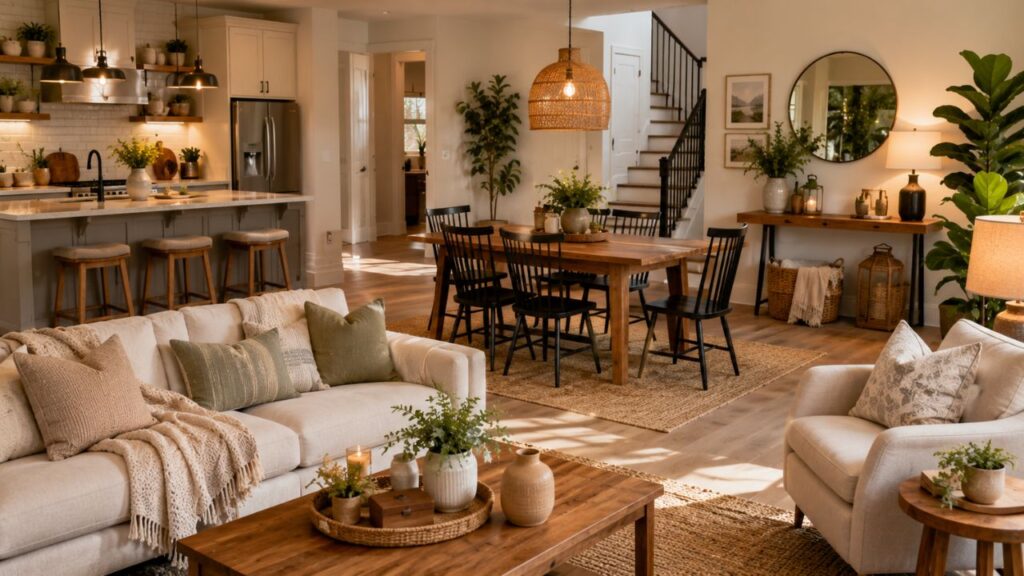
Colour tends to get all the attention, but texture is what makes a room feel finished rather than flat. A living room built entirely from smooth, hard surfaces — glass, polished wood, leather — can feel stylish in photographs but a little cold in person. Introducing softer materials like a knit throw, a woven basket, or a linen cushion cover breaks up that hardness without changing the colour scheme at all. The same idea applies outdoors: a smooth concrete patio paired with a woven outdoor rug and a wooden table feels considerably more inviting than concrete and metal alone. Mixing at least two or three different textures in any single room is a small habit that pays off disproportionately.
Getting the Fundamentals Right Before You Buy Anything
Before shopping for cushions or artwork, it helps to nail down three basics: purpose, colour, and scale. Skipping these steps is the most common reason a room ends up looking cluttered or oddly assembled even after money has been spent on it. A helpful habit is to pause before any purchase and ask whether the item solves a real problem in the room or simply looks appealing in isolation.
Reading a Room’s Purpose First
Stand in the room and list what actually happens there. A dining table doubling as a home office desk needs different lighting and storage than one used purely for meals. Once the primary use is clear, secondary uses can be planned around it instead of competing with it. This single step prevents a huge share of the “why doesn’t this room feel right” frustration that shows up after a space has already been furnished.
Colour, Balance, and the 60-30-10 Approach
Colour sets the emotional register of a room faster than almost any other element. Soft neutrals tend to feel calming, while saturated tones bring energy and warmth. A simple ratio many decorators lean on is 60% dominant colour (walls, large furniture), 30% secondary colour (rugs, curtains, upholstery), and 10% accent colour (cushions, art, small objects). This keeps a palette cohesive without forcing everything to match exactly. It also gives a clear starting point when standing in a paint aisle feeling overwhelmed by options.
Scale and Proportion Mistakes to Avoid
Oversized furniture crammed into a small room feels heavy and blocks movement. A tiny rug floating under a large sofa looks like an afterthought rather than a design choice. Measure the room, sketch a rough layout, and consider how each piece relates to the ones around it before buying anything. In open-plan homes, a well-sized rug can visually define a seating area without needing a wall, which is especially useful in studio apartments or combined living-dining layouts where zones would otherwise blur together.
Room-by-Room Decoration Tips Decoradyard Ideas
Once the fundamentals are settled, the specifics differ by room. Here’s how the same decoration tips decoradyard principles play out in the spaces people actually spend the most time in, from the busiest shared areas to the quietest corners of a home.
Living Rooms
Anchor the room around a focal point — a fireplace, a media unit, or a large window — and arrange seating to encourage conversation rather than facing everything toward a screen. Layer at least two light sources beyond the overhead fixture: a floor lamp and a table lamp go a long way toward making evenings feel cosy instead of clinical. A mix of textures — a woven throw, a smooth ceramic vase, a soft rug underfoot — adds depth that a single material palette can’t achieve on its own.
Bedrooms
Bedrooms benefit from restraint. Soft, breathable bedding, black-out or sheer curtains depending on the light in the room, and a nightstand with just enough surface for essentials tend to outperform a room packed with decorative objects. Keep the palette narrow — two or three tones is usually plenty for a space meant for rest. A reading lamp positioned within arm’s reach of the bed is a small addition that quietly improves the room every single night.
Kitchens
Open shelving works well only when what’s on it is genuinely used and reasonably tidy; otherwise, closed cabinetry is the more forgiving choice. A runner rug in front of the sink, a small potted herb on the windowsill, and matching canisters for dry goods add warmth without adding clutter. Even something as small as coordinating tea towels with the wall colour can make a kitchen feel considered rather than purely functional.
Small Spaces and Apartments
Multi-functional furniture — a storage ottoman, a fold-down desk, a bed with drawers underneath — matters more here than anywhere else. Mirrors placed opposite a window can noticeably brighten a small room and make it feel less boxed in. Vertical storage (tall shelving rather than wide) keeps floor space open for movement, and choosing furniture with visible legs rather than solid bases helps a small room feel less heavy overall.
Storage as a Design Decision, Not an Afterthought
Clutter is one of the fastest ways to undo an otherwise well-decorated room, and storage is usually the real fix rather than more decor. Closed baskets on open shelving hide everyday items while keeping the shelf itself looking tidy. A bench with hidden storage by the entryway solves the shoe-and-bag pile-up that tends to build near a front door. In bedrooms, under-bed storage boxes free up closet space for items that actually need to be seen and reached easily. Treating storage as part of the design plan from the start — rather than something to figure out after the room is already furnished — prevents a lot of the visual clutter that creeps in over the following months.
Lighting Strategies That Change the Feel of a Room
Lighting is one of the most underrated tools in any decorating plan, and also one of the cheapest to fix. Two identical rooms can feel completely different depending purely on how they’re lit, which is why lighting shows up so often across decoration tips decoradyard advice aimed at beginners.
Layering Natural and Artificial Light
Sheer curtains, lighter window treatments, and furniture placed away from blocking windows all help maximise daylight. In the evening, aim for at least three light sources per room — ambient, task, and accent — rather than relying on a single overhead bulb that flattens everything underneath it. Warm-toned bulbs generally suit living areas and bedrooms, while cooler tones work better in kitchens and workspaces where alertness matters more than cosiness.
Choosing Fixtures With Purpose
A reading chair needs a focused task light nearby. A hallway or entry benefits from warmer, softer bulbs that feel welcoming rather than clinical. Dimmer switches, where possible, let one fixture serve multiple moods throughout the day without needing several separate lamps. This flexibility is often what separates a room that adapts well from morning to night from one that feels the same, and slightly flat, at every hour.
Outdoor Decoration Tips Decoradyard for Yards, Patios, and Balconies
Outdoor spaces are often the last area homeowners think about, yet they’re usually the first thing guests and passersby actually notice. Extending the same care given to interiors — thoughtful seating, layered lighting, and a bit of greenery — pays off quickly here, and it doesn’t require a landscaping budget to make a real difference.
Creating a Usable Outdoor Layout
Start by deciding zones: a seating area, a dining spot, a walking path. Weather-resistant furniture is worth the slightly higher upfront cost since it holds up through seasons without needing replacement. String lights or lanterns extend how late an outdoor space can comfortably be used in the evening, turning a yard that’s only used in daylight into one that works for dinners and gatherings after sunset too.
Low-Maintenance Greenery Choices
Not every yard needs to be a full garden project. Drought-tolerant plants like lavender, rosemary, and succulents suit hot or dry climates and ask very little upkeep in return. Shade-loving options such as ferns and hostas work well in covered patios or balconies that don’t get much direct sun. Grouping plants with similar watering needs together also makes maintenance far simpler, since nothing gets accidentally over- or under-watered while trying to keep a mixed collection alive.
Budget-Friendly Ways to Refresh a Space
Good decorating is rarely about how much was spent — it’s about whether the right choices were made with what’s available. This is often the part of decoration tips decoradyard advice that surprises people most, since the highest-impact changes are frequently the cheapest ones.
Repurposing What You Already Own
Before buying anything new, look around the house. A dresser from a spare room can become a media console. Old jars can hold utensils or plants. Rearranging existing furniture, sometimes just swapping which wall the sofa sits against, can make a room feel new without spending a cent. It’s worth doing this exercise before any shopping trip, since it often reveals that fewer new purchases are actually needed than assumed.
Small Purchases With Outsized Impact
New cushion covers, a fresh coat of paint on one accent wall, updated cabinet handles, or a single well-chosen piece of art can shift the feel of a room more than people expect. Shopping end-of-season sales for larger items like rugs or lamps also stretches a decorating budget considerably, and buying one higher-quality piece instead of several cheaper ones usually holds up better over the years.
Common Decorating Mistakes That Undo Good Decoration Tips Decoradyard Advice
- Overcrowding a room with too many decorative objects, which erases any single item’s impact and makes cleaning harder.
- Ignoring scale, leading to furniture that’s either too large or too small for the space it sits in.
- Choosing style over function, resulting in beautiful but genuinely impractical rooms.
- Relying only on overhead lighting, which flattens a room’s mood at every hour of the day.
- Matching everything too precisely, which can feel sterile and showroom-like rather than lived-in.
- Neglecting outdoor spaces entirely, despite them being highly visible to guests and neighbours alike.
- Buying decor before settling on a colour direction, which often leads to items that never quite fit together.
Keeping a Decorated Space Looking Good Over Time
Even the best decoration tips decoradyard ideas lose their impact if a space isn’t maintained afterward. Consistency matters more than any single big purchase. Regular decluttering keeps surfaces from filling up with items that don’t add value, and it’s usually the fastest way to make a room feel instantly better without spending anything. Rotating a few decorative pieces every season — swapping cushion covers, moving artwork, refreshing greenery — keeps a home feeling current without requiring a full redesign. A workable rule is to review each room every few months and ask whether everything in it still earns its place; anything that doesn’t can be stored, donated, or moved to a spot where it will actually be used and appreciated.
Frequently Asked Questions
What exactly do decoration tips decoradyard refer to?
They describe a practical, budget-conscious approach to styling both indoor and outdoor spaces, prioritising comfort, function, and personal touches over rigidly following trends.
Do I need to hire a professional to use these ideas?
No. Most of the ideas here — layout adjustments, lighting changes, colour balancing — can be done without professional help. A designer becomes useful mainly for structural changes or large-scale renovations.
How much does it typically cost to redecorate a room this way?
Costs vary widely, but many of the biggest improvements — decluttering, rearranging furniture, adding lighting layers — cost little to nothing. Bigger purchases like rugs or sofas can be planned around seasonal sales.
What’s the fastest way to make a room feel more put together?
Decluttering and improving lighting usually deliver the most visible change for the least effort, often within a single afternoon, well before any new furniture needs to be considered.
Are these decorating ideas suitable for renters?
Yes. Furniture layout, lighting, rugs, curtains, and removable decor all work well in rented spaces since none of them require permanent changes to walls or fixtures, making them ideal for anyone who can’t repaint or renovate.
How do I choose a colour palette that won’t feel outdated quickly?
Leaning on neutral tones for large surfaces and saving trend colours for small, easily replaceable accents like cushions or small decor keeps a room adaptable as tastes shift over time.
Can small yards or balconies really be decorated meaningfully?
Yes. Compact outdoor spaces often benefit the most from focused choices — a couple of well-placed plants, one seating piece, and simple lighting can transform a small area significantly.
How often should a space be refreshed?
There’s no fixed rule, but reviewing a room every three to six months and swapping a few smaller elements keeps things feeling current without needing a full overhaul.
Is it better to decorate one room at a time or the whole house at once?
Working room by room tends to produce better results, since it allows the budget and attention to stay focused rather than being spread too thin across every space at once.
Bringing It All Together
None of this requires a big budget, a design background, or a complete renovation. The homes that feel effortlessly put together usually got there through a series of small, considered decisions — the right scale, a balanced palette, layered lighting, and a few personal touches added over time. Whether the goal is a cosy living room, a calmer bedroom, or a backyard worth spending evenings in, the same simple logic applies: understand how the space will be used, keep it proportionate, and let it reflect the people who actually live there. Start with one room, or even one corner, and the rest tends to follow naturally.